
Your Investor Meeting Deserves Presentation Design Agency San Francisco
Bay Area investors see hundreds of decks a year and pattern match within the first three slides. A structurally weak deck rarely earns a second meeting. Rather, the door gets permanently closed for that firm. StoryFlo’s presentation design agency in San Francisco gets calls from Bay Area business founders before that door closes. We build Series A through Series C pitch decks, biotech investor narratives, and Demo Day presentations for Bay Area tech companies. Founders walk into the room with a narrative that survives partner scrutiny and moves investors toward terms, not more questions.

.avif)
![Backlit advertisement sign on a street displaying the word 'ASÍ' with its pronunciation and meaning: 'así (ah-see) adv. [Sp.] a. Like this, b. This way'. Below, text reads: 'CRE Retail Brokerage & Tenant Rep', set against a background of white arches and a corridor.](https://cdn.prod.website-files.com/6a1423bf64953b6741b4dff8/6a50ee682905177218b4e3e3_Header%20Image%2002.avif)










Decks That Match Your Stage
Our presentation design services San Francisco are the ones Bay Area founders rely on blindly. We start from one principle: every fundraising stage requires a different narrative architecture, not just a different visual style. A seed deck and a Series B deck answer entirely different investor questions. There’s no one-size-fits-all, so we build stage-appropriate structures for every founder.
Seed Stage Decks
Seed investors aren't evaluating a business yet. They're evaluating founder conviction and market understanding. With no traction to anchor the case, we build the narrative around founder insight and market gap articulation, structured specifically to convert investors betting on people rather than proof.
Series A Pitches
Series A investors want proof that real customers pay real money repeatedly. Founders often present early traction as raw numbers instead of a pattern. We restructure the story so traction reads as evidence of repeatability, moving the narrative from "this works" to "this works consistently.
Series B Decks
Series B investors already believe the product works. They're evaluating whether growth is repeatable at scale or not. Founders who reuse their Series A structure fail here. We build a growth rate narrative, unit economics at scale, and a repeatable acquisition story instead that shifts the narrative to scalability.
Biotech Investor Decks
Biotech founders have a communication gap problem. They must be credible to specialist investors while staying legible to generalists, in the same deck. We navigate that science-to-investment translation, preserving mechanism of action credibility while building a market opportunity narrative any generalist VC can evaluate without a PhD.
Demo Day Presentations
Demo Day gives you three to five minutes and one thesis, in a room evaluating twenty companies in sequence. Every slide must support the thesis, or it doesn't belong. We build maximum conviction per slide and a closing that makes investors want to find you after the session.
Product Launch Decks
Bay Area product launches serve three audiences at once: internal teams, enterprise buyers, and press. One narrative rarely serves all three well. We identify your primary audience, build the core story around their evaluation criteria, and layer supporting materials for the rest.
Process Designed Around Your Meeting Date
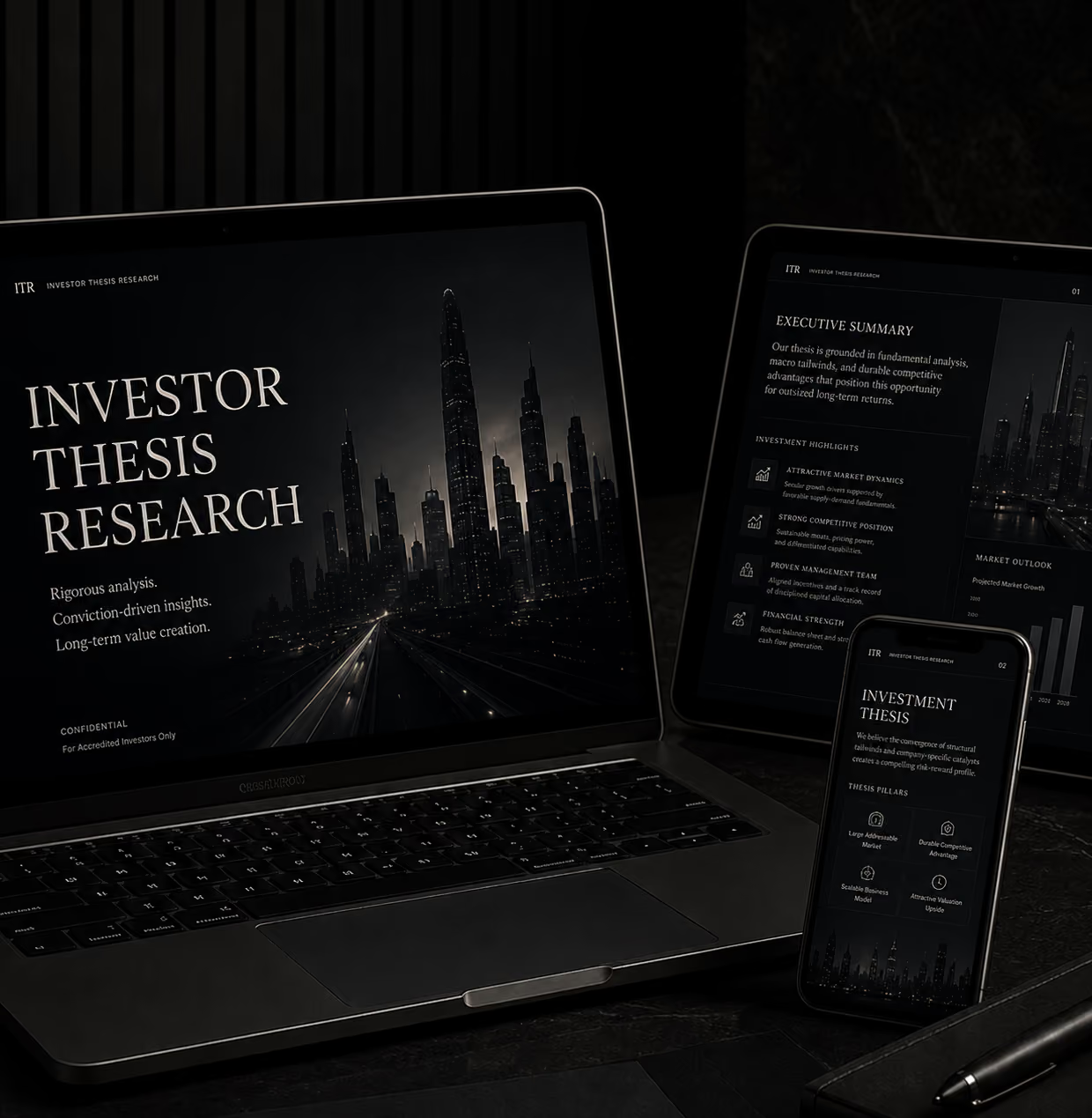
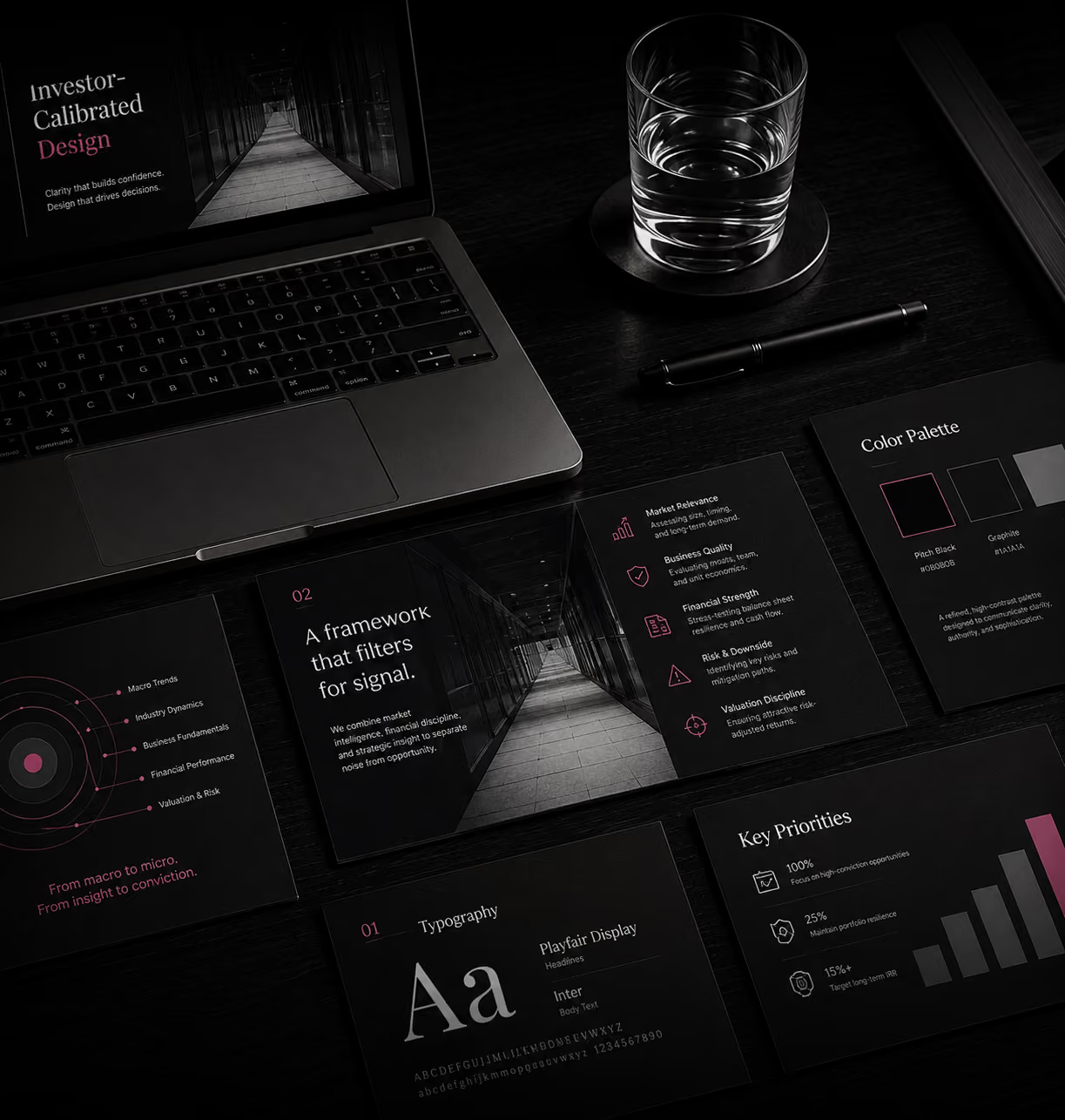
Investor Thesis Research
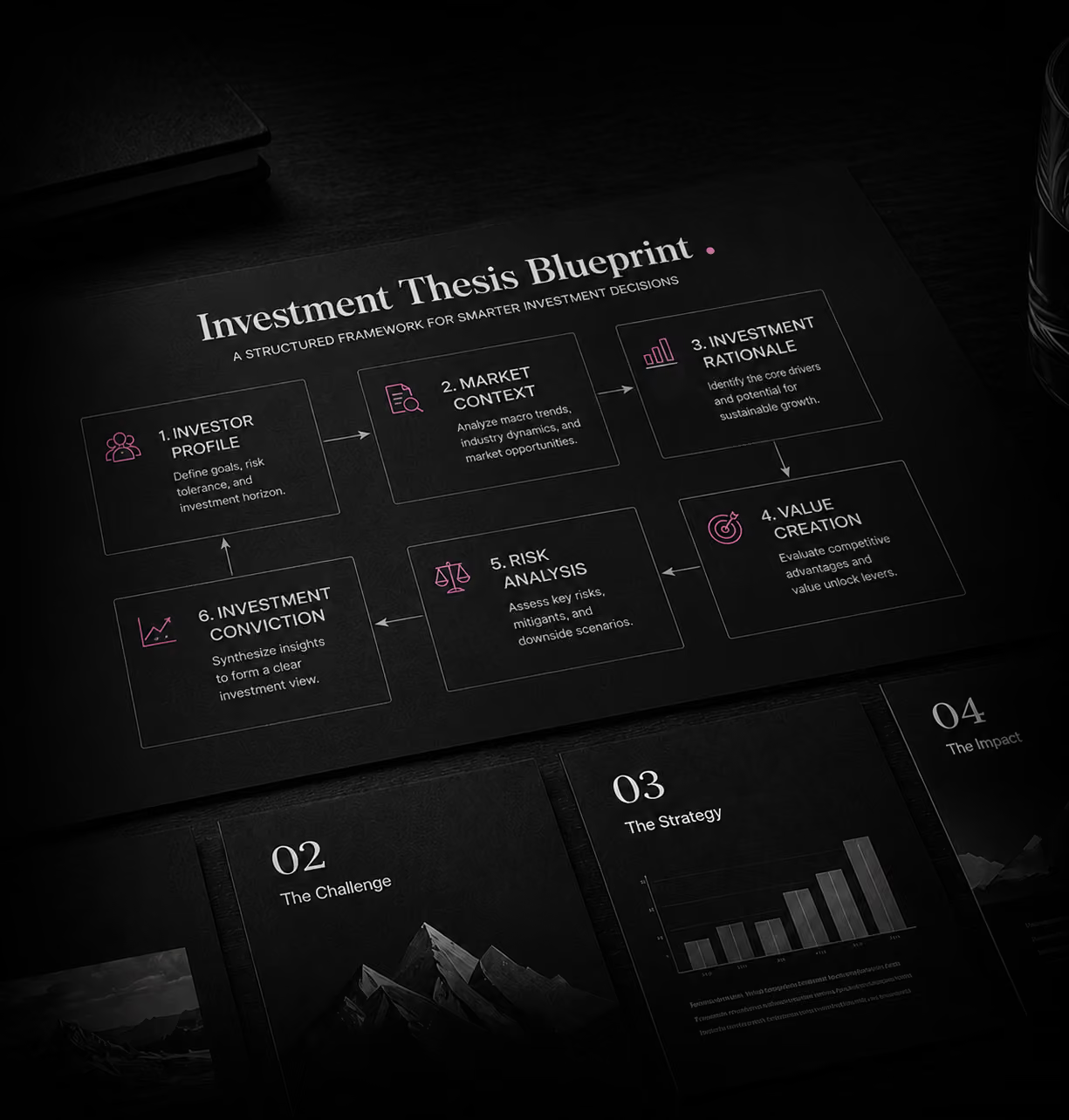
Investment Thesis Blueprint
Investor-Calibrated Design
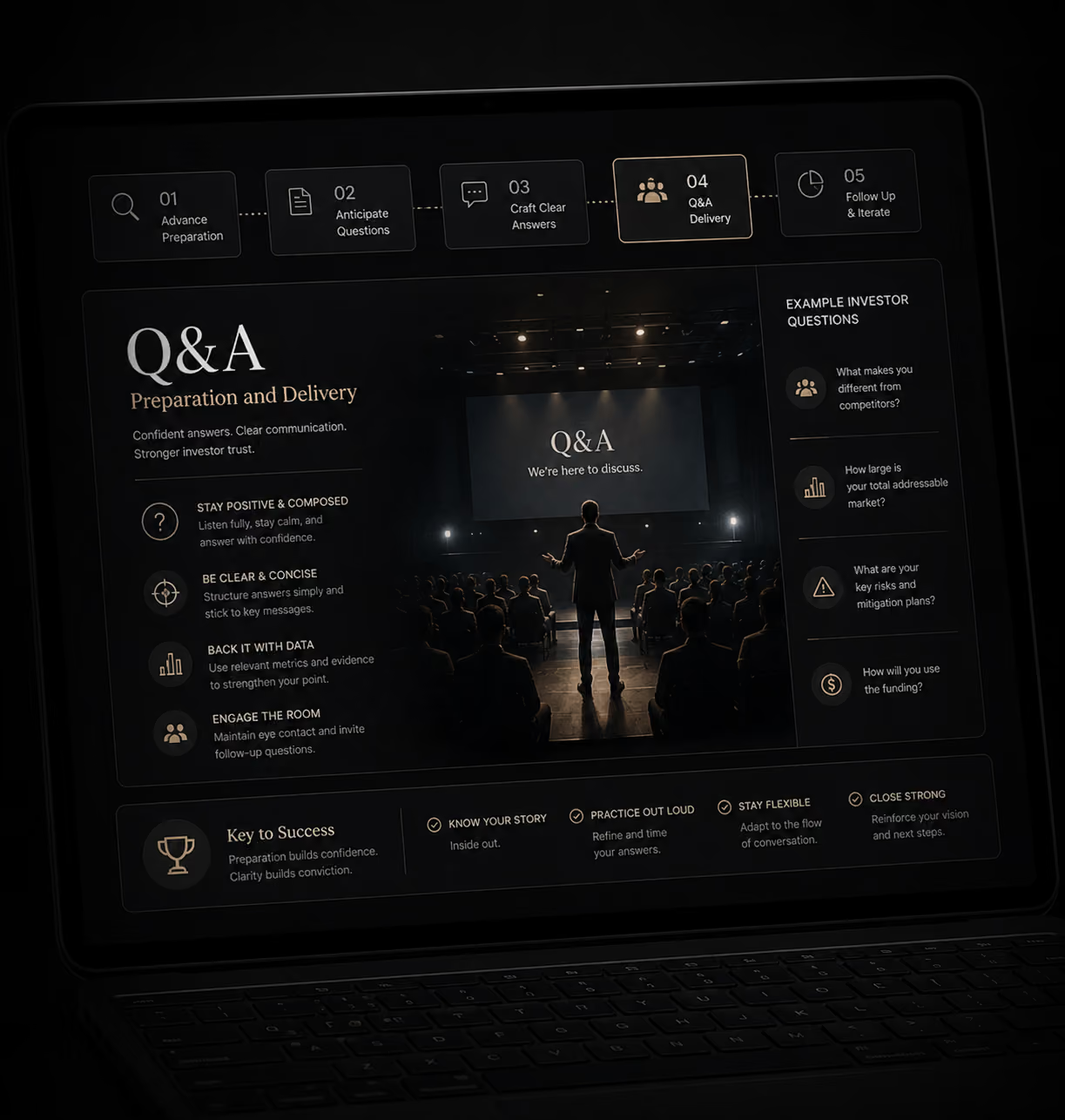
Q&A Preparation and Delivery
Get Your Deck Ready Before Your Investor Meeting Window is Near
We respond within the hour during business hours because fundraising deadlines don't wait for a callback.We'll tell you honestly what's achievable in your timeline on the first call, not after a two-week discovery process.
Tell Us About Your Round
Share your target investors, your current deck status, and your first meeting date. We will tell you exactly what is achievable in your timeline.
Rounds We Helped Close
These are confirmed funding outcomes, not projected pitch improvement metrics or estimated capital raise figures.These are three stories. Our full track record is $5.1B+ raised across hundreds of founders like them.
.avif)
Developer Tools Founder Closes $8M Series A in Three Meetings After Nine Months of Passes
A dev-tools founder spent 9 months getting passed on at Series A. Partners kept asking "what's the actual thesis" mid-meeting, since the thesis sat on slide 8 behind the demo and market size, and traction was raw numbers with no growth story. We moved the thesis to slide 2, rebuilt traction around a 6-month growth trend, and cut the feature-comparison matrix. In the first meeting with the new deck, the partner opened by asking about terms, rather than more info. The founder closed an $8M round in three meetings. A whole four months faster.
.avif)
Preclinical Biotech Founder Secures $14M From Crossover Investors After Generalist VCs Kept Passing
A preclinical biotech with strong early data pitched generalist and specialist VCs. Generalists kept saying "we don't understand the science enough". Really, the science was never translated into market terms. The deck ran like a paper (hypothesis, methods, results) instead of problem, market, solution, ask. We put market opportunity first, turned the mechanism into a visual a non-scientist could follow, and translated clinical data into market-impact terms without losing specialist credibility. Generalists began asking commercial questions instead of deferring to the specialist. The company secured $14M from a crossover group in seven weeks.
.avif)
Growth-Stage SaaS Company Aligns 340 Engineers Around a Strategy Pivot in One All-Hands
A growth-stage SaaS company was pivoting product strategy and needed to align a technical eng/product org around it. In prior all-hands Q&A, employees kept asking how initiatives connected to any larger plan. Strategy wasn't landing as coherent. The deck listed initiatives with no central thesis and roadmap features with no customer-problem framing. We rebuilt the narrative around one central thesis that made every initiative legible as part of a single plan. Post-all-hands Q&A shifted from confused questions to execution questions, and alignment survey scores rose sharply within two weeks.
What Founders Discovered Their Deck Was Actually Missing
These are direct founder quotes, edited only for length, not polished testimonials.Shared with name and role permission from each founder.

I thought our problem was visuals, that the deck needed to look sharper. StoryFlo found the real issue, our thesis wasn't surfacing until slide nine. First meeting after the rebuild, investors started asking about terms instead of asking for more information.
Our Series A deck was all product-market fit evidence. StoryFlo showed us we had zero scalability narrative and no unit economics at scale. Series B conversations changed completely once that story existed.
We were too technical for generalists and too simplified for specialists. StoryFlo built one deck that worked for both. Impact investors and traditional VCs both said the thesis was the clearest they'd seen that week.
Our LP update presentations needed to communicate fund performance transparently during a difficult market cycle where institutional investors were actively scrutinizing allocation decisions. StoryFlo structured the narrative around LP confidence signals: data transparency, risk acknowledgment, and forward thesis discipline. We closed that cycle with zero LP withdrawals.
I assumed investors needed more scientific detail. Turns out they needed the market size story before the science. Once we led with that, generalist VCs started engaging directly instead of waiting for the specialist in the room to weigh in.
Our deck had too many slides and not enough conviction per slide. StoryFlo compressed it down to one thesis. Investors were finding us in the room after the session instead of us chasing them down.
I'd raised before, I figured I didn't need help with narrative. What surprised me was how much sharper the thesis got. The deck we built together produced meetings our internal version never did.
Every Stage, Every Sector
Our business presentation designers San Francisco founders trust know that stage, not just industry, shapes what a deck must prove. A seed and a Series C company in the same sector need entirely different narratives.

Enterprise Technology & SaaS
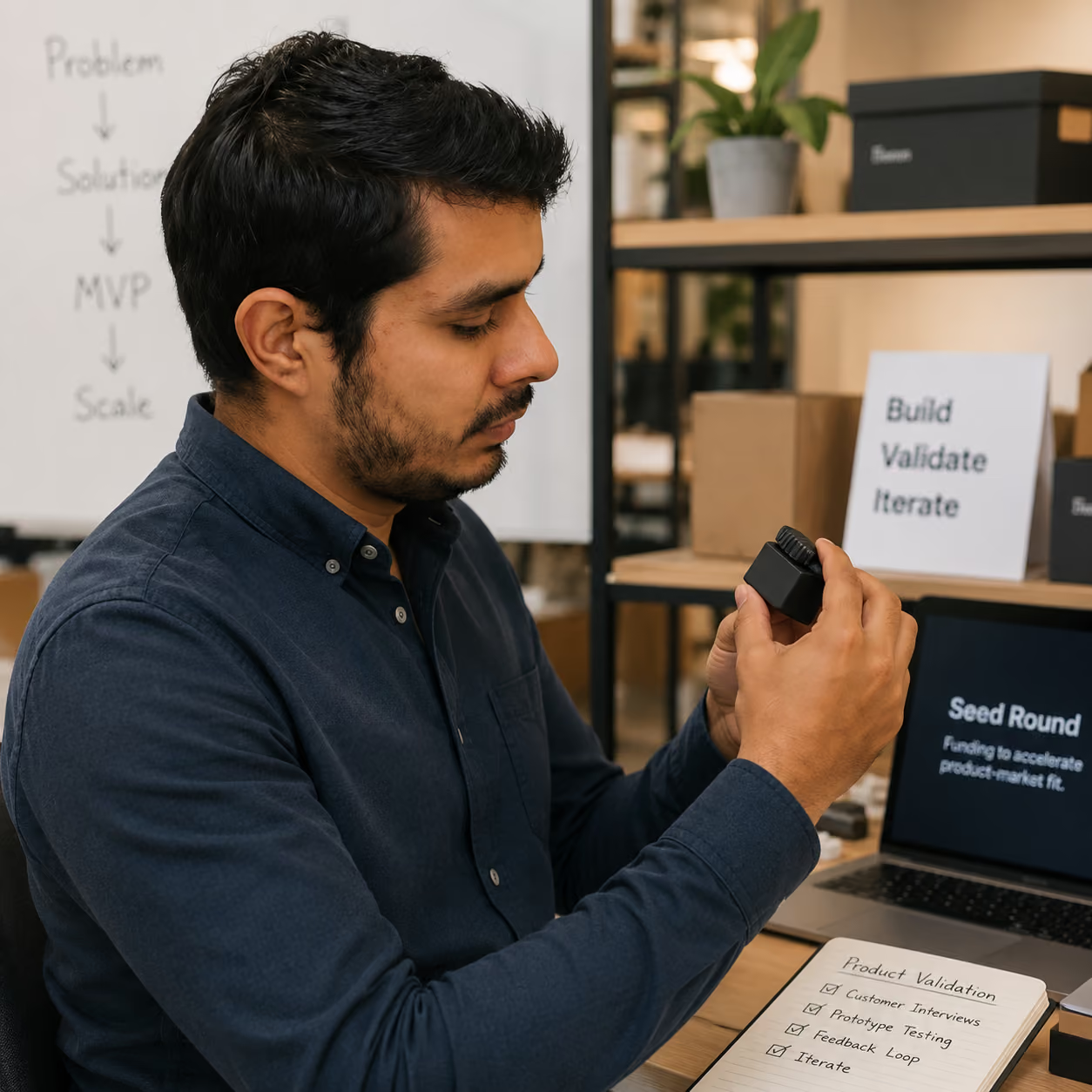
Venture Capital & Early Stage
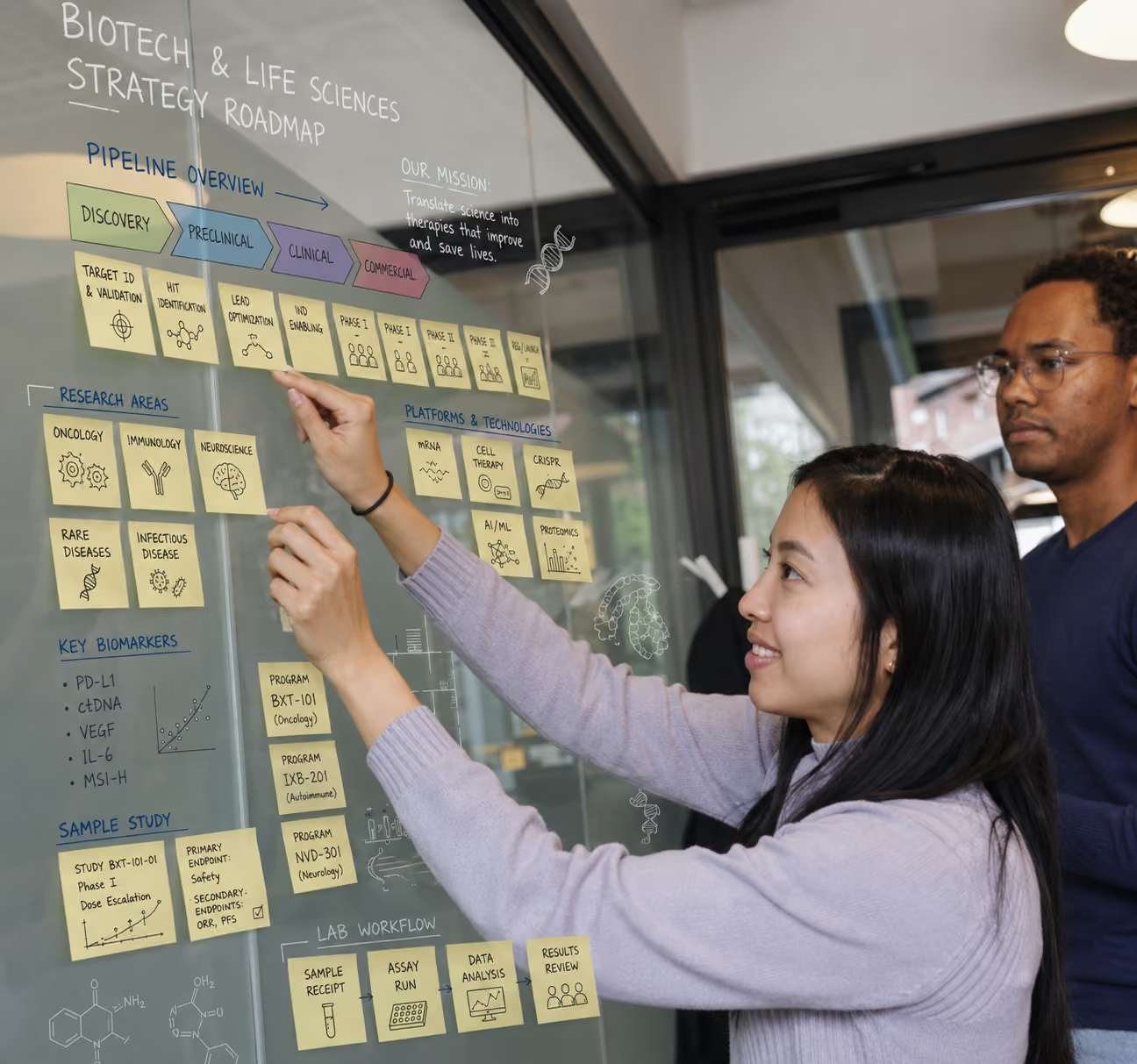
Biotech & Life Sciences

Deep Tech & Hardware
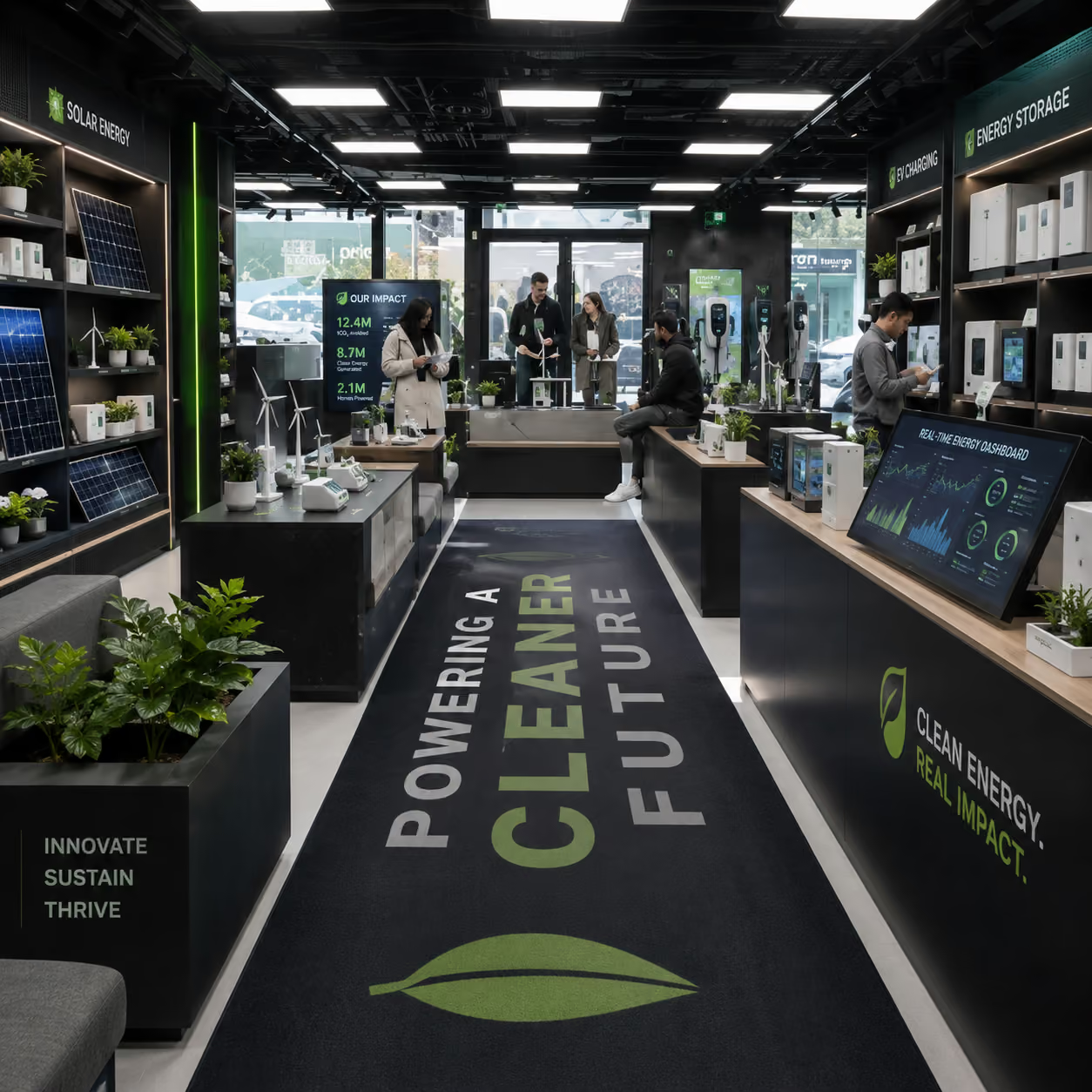
Climate Tech & Clean Energy

Fintech & Web3

Consumer & D2C Tech

Healthcare Technology
Why Bay Area Fundraising Decks Actually Fail
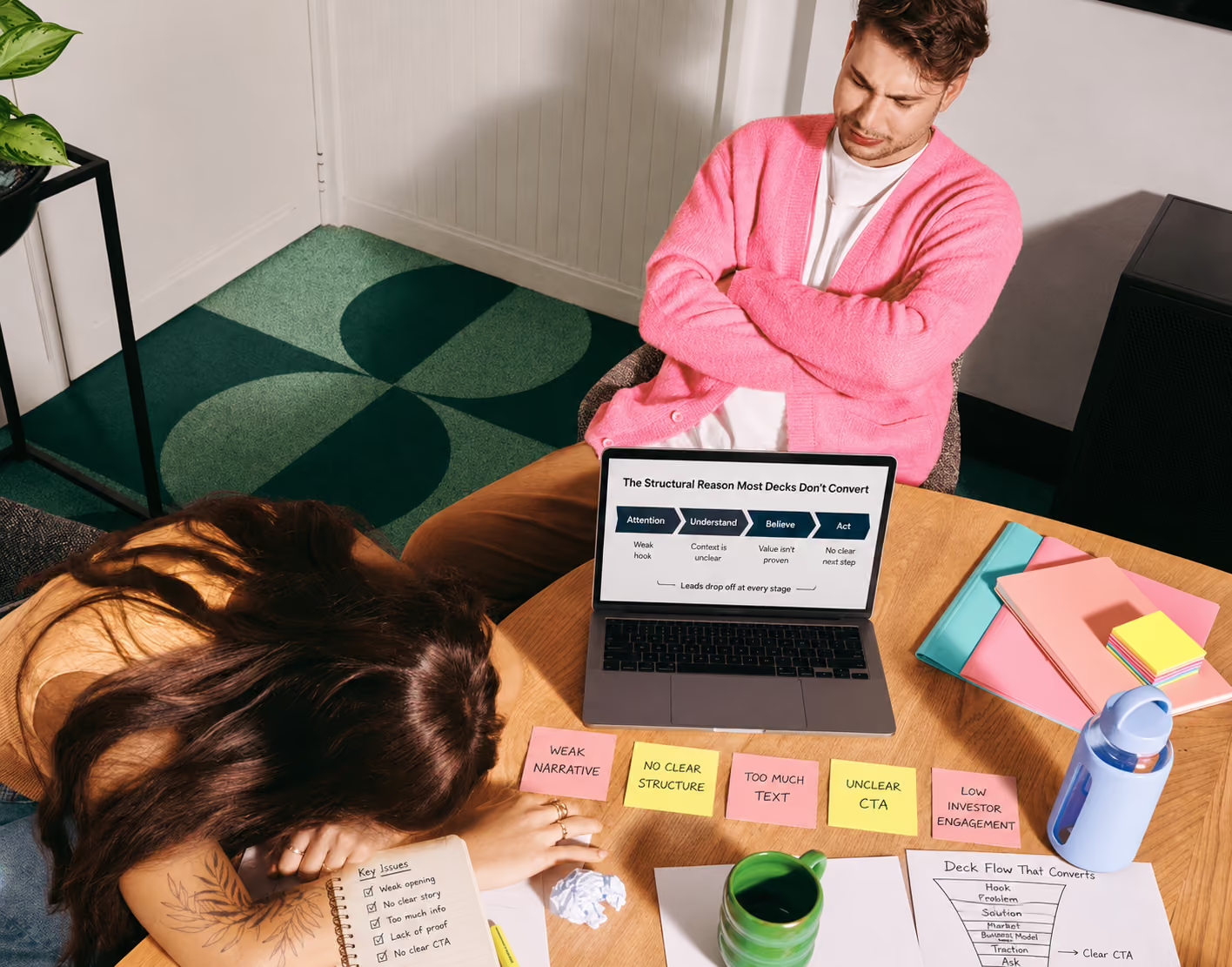
The Structural Reason Most Decks Don't Convert
Across hundreds of Bay Area pitch decks, one pattern predicts partner meeting failure more than any other: where the investment thesis sits on the page.
The Thesis Placement Problem: Most Bay Area decks that fail at the partner meeting stage, not the first screening, but the actual partner meeting, share one structural flaw: the investment thesis appears on slide seven or eight, after the problem, solution, product demo, and market size. By the time it arrives, the investor has already formed a preliminary view from incomplete information. That means the meeting becomes about the thesis they inferred from the first six slides, not the one actually presented. The result is a meeting spent defending a position the investor assumed incorrectly, rather than a meeting spent evaluating the real opportunity.
The Evidence Calibration Problem: The second most common failure is evidence depth calibrated to what the founder finds impressive rather than what the investor finds credible. Most founders spend three slides on product features, which investors barely evaluate at pitch stage, and one slide on unit economics, which investors scrutinize heavily from Series A onward. Investors who arrive skeptical of the economics leave the meeting with that skepticism unresolved. Bay Area investors consistently want deeper evidence on retention, payback period, and channel efficiency than founders typically provide, while overinvesting in product depth nobody asked for.
The Closing Ask Problem: The third structural failure is a vague funding ask. Most decks say "we're raising $X" without naming what the capital funds, what milestone it reaches, or what that milestone proves. Investors read a vague ask as a signal that the founder hasn't finished the financial modeling or isn't confident in the answer. A specific, milestone-anchored ask changes how competent the founder appears before a single word is spoken.
Closing: These three failures point to the same root cause, narrative architecture built before the investor's evaluation process is understood. Getting presentation design in San Francisco right starts with the thesis, the evidence, and the ask, long before a single slide gets designed.
The Architecture That Produces Term Sheets
Bold Opening: There is a specific structural sequence that Bay Area investors respond to consistently, not because it's the only valid structure, but because it matches how they actually evaluate a deck.
Opening Context: Investors aren't reading decks, they're making a rapid binary decision: is this worth more of my time? Our presentation design services San Francisco founders use are built around the sequence that answers that question fastest, because that sequence is what produces follow-up meetings rather than polite passes.
Element 1, The Investment Thesis Statement: One sentence naming the market, the insight, and why now. It belongs on slide one or two, never later. Appear late, and the investor fills the gap with their own inference, usually the wrong one.
Element 2, The Market Sizing Build: A bottoms-up calculation from identifiable customer segments, not a top-down TAM percentage claim. Bay Area investors have seen thousands of "$10B TAM" slides and discount them on sight. A bottoms-up build signals real primary research.
Element 3, The Traction Narrative: The growth rate story, not the current metric. "$2M ARR" is a fact. "$2M ARR growing 15% month-over-month for six months with zero churn" is a narrative implying a next chapter. Founders routinely present the metric without the rate.
Element 4, The Competitive Position Claim: One defensible position, not a feature comparison matrix. A matrix raises more questions than it answers and signals the founder hasn't decided where they win. A position claim names the specific segment, the specific problem, and why competitors can't copy it.
Element 5, The Milestone-Anchored Ask: Funding amount, what it funds, what milestone it reaches, and what that milestone proves to the next round investor. Vague asks signal operational uncertainty to investors who evaluate capital efficiency above nearly everything else.
Closing: These five elements are the structural minimum for a Bay Area deck built to convert partner meetings into term sheets. StoryFlo builds every one of these structures as the foundation of every engagement, before a single slide gets designed.

Why Your Series A Deck Won't Work for Series B
Bold Opening: Most founders assume a pitch deck is just a pitch deck, and the only thing that changes between rounds is the numbers. That assumption is wrong, and it costs founders term sheets.
Why Each Stage Is a Different Document: Every funding stage is defined by the question the investor is trying to answer, and that question changes fundamentally at each round. Seed investors ask whether the founder can identify a real problem and a plausible solution. Series A investors ask whether real customers pay real money, repeatedly. Series B investors ask whether growth is repeatable and acquisition scales with capital. Series C and beyond ask whether the company has the operational infrastructure to become a category leader. A deck built to answer the Series A question isn't just insufficient for Series B. It's actively counterproductive, signaling the founder is still thinking about product-market fit rather than scalability.
What This Means for Professional Presentation Designers San Francisco: Seed to Series A shifts the narrative from founder insight to customer evidence, anecdote gives way to cohort data. Series A to Series B shifts from customer evidence to growth mechanics, case studies give way to unit economics and acquisition channel analysis. Series B to Series C shifts from growth mechanics to market leadership claims, metrics give way to competitive moat evidence. Professional presentation designers San Francisco founders hire understand these transitions in the narrative architecture, not just in the visual layer.
The Stage Confusion Problem: When founders use the wrong stage narrative, investors read it as a signal about founder maturity. A Series B founder presenting a Series A narrative signals they don't understand what Series B investors evaluate. This isn't a design problem; it's a narrative problem design alone can't fix without addressing the stage mismatch underneath it.
Closing: A specialist presentation design agency San Francisco founders trust delivers exactly this: a stage-appropriate narrative architecture that matches investor evaluation criteria at every specific round, for every founder, at every stage.

Pricing Built Around Your Fundraising Stage
Every package includes investor audience profiling, narrative blueprint development, and structured revision rounds. Every package has a defined delivery timeline because you're working toward a specific investor meeting date, not a general deadline.
Frequently Asked Questions
Enterprise buyers, founders, and senior executives will find immediate answers about StoryFlo's presentation design process, engagement model, and delivery standards here.
Two to three weeks for quality work through our Series A package. Investor audience profiling, complex financial narratives, and technical content translation each add time. If your partner meeting is sooner, ask about priority delivery.
Yes. We audit the deck for the most common Bay Area gap. Decks that get first meetings but stall before follow-ups. About half of our San Francisco engagements are rebuilds. The audit gives you a diagnosis before we touch a single slide.
Series A proves product-market fit through customer evidence. Series B proves growth is repeatable and acquisition is scalable. The deck isn't updated; it's restructured. The traction slide and the competitive slide both change entirely between the two.
Three things. Investor audience profiling by target firm, not generic audience mapping, as the first step of every engagement. Stage-specific narrative architecture, knowing the real difference between a Series A and Series B structure. And $5.1B+ in verified capital raised through decks we've built.
Yes. Biotech decks face a dual audience, generalist VCs and specialist biotech investors, each with different evaluation criteria. We keep the mechanism of action scientifically accurate while translating it into a visual any generalist can follow, without losing the credibility signals specialists look for.
Yes. Demo Day means a hard time limit, one investment thesis, and a highly competitive multi-company format. Our Demo Day package compresses the narrative to maximum conviction per slide, with timing rehearsal and post-session investor conversation prep included.
The Bay Area Investor Network Doesn't Forget a Pass
Bay Area investors rarely reconsider a company they've passed on. The pass gets recorded and referenced when you raise your next round. You have a window to fix the narrative before those meetings start. StoryFlo is the presentation design agency San Francisco founders call to close that window before it closes on them.