
Investor Deck Design Agency Built for Capital Raises
Founders and CFOs preparing for high-stakes investor meetings work with StoryFlo because one presentation determines whether a funding round moves forward or stalls completely. Every investor deck is built around how investors evaluate opportunities, not how founders describe their product. That distinction is why internally built decks consistently underperform in partner meetings. Every engagement begins with a fundraising narrative strategy. No slide is designed until the capital story is structurally sound. The $5.1B raised through StoryFlo decks is proof of method.

.avif)
![Backlit advertisement sign on a street displaying the word 'ASÍ' with its pronunciation and meaning: 'así (ah-see) adv. [Sp.] a. Like this, b. This way'. Below, text reads: 'CRE Retail Brokerage & Tenant Rep', set against a background of white arches and a corridor.](https://cdn.prod.website-files.com/6a1423bf64953b6741b4dff8/6a50ee682905177218b4e3e3_Header%20Image%2002.avif)











What We Build For Founders
StoryFlo delivers end-to-end professional investor deck design covering fundraising narrative development, financial story architecture, and investor-grade visual design through to raise-ready delivery. Each of the six services below addresses a specific capital-raising scenario rather than a generic presentation need.
Series A Pitch Decks
For founders entering their first institutional venture capital round, this investor pitch deck design service builds around the market narrative, traction framing, team positioning, and use of funds logic that VC partners evaluate in first meetings. Outcome: a deck that earns a second partner meeting and advances toward a term sheet.
Investor Deck Redesign
For founders whose current deck generates first meetings but fails to convert them into term sheets, our investor deck designers begin with an investor readiness audit identifying exactly where the narrative loses conviction. Outcome: same company, stronger capital momentum, faster round progression.
Growth Equity Decks
Institutional investors raising Series B and beyond expect detailed unit economics, cohort data, and a defensible market position narrative. This pitch deck design agency service is built for companies where investors read hundreds of decks per quarter. Outcome: a deck that signals operational maturity alongside growth ambition.
LP Roadshow Decks
For fund managers and GPs raising from limited partners including family offices, endowments, and pension funds, structure leads with fund strategy, track record, and portfolio construction thesis rather than company narrative. Outcome: LP confidence established before the first meeting concludes
Board Fundraising Decks
Leadership teams presenting a new funding round or capital allocation strategy to the board before the external raise begins must satisfy both independent director governance concerns and investor board member growth expectations simultaneously. Outcome: internal board alignment secured before the market process opens.
Due Diligence Decks
Supplementary deep-dive presentations for the due diligence phase of an active funding round cover unit economics, financial model assumptions, market sizing methodology, and competitive moat analysis in the detail institutional investors require. Outcome: due diligence completed with conviction and momentum intact through to close.
From Raw Narrative to Raise-Ready in Four Stages
Fundraising Context Mapping
Investment Narrative Build
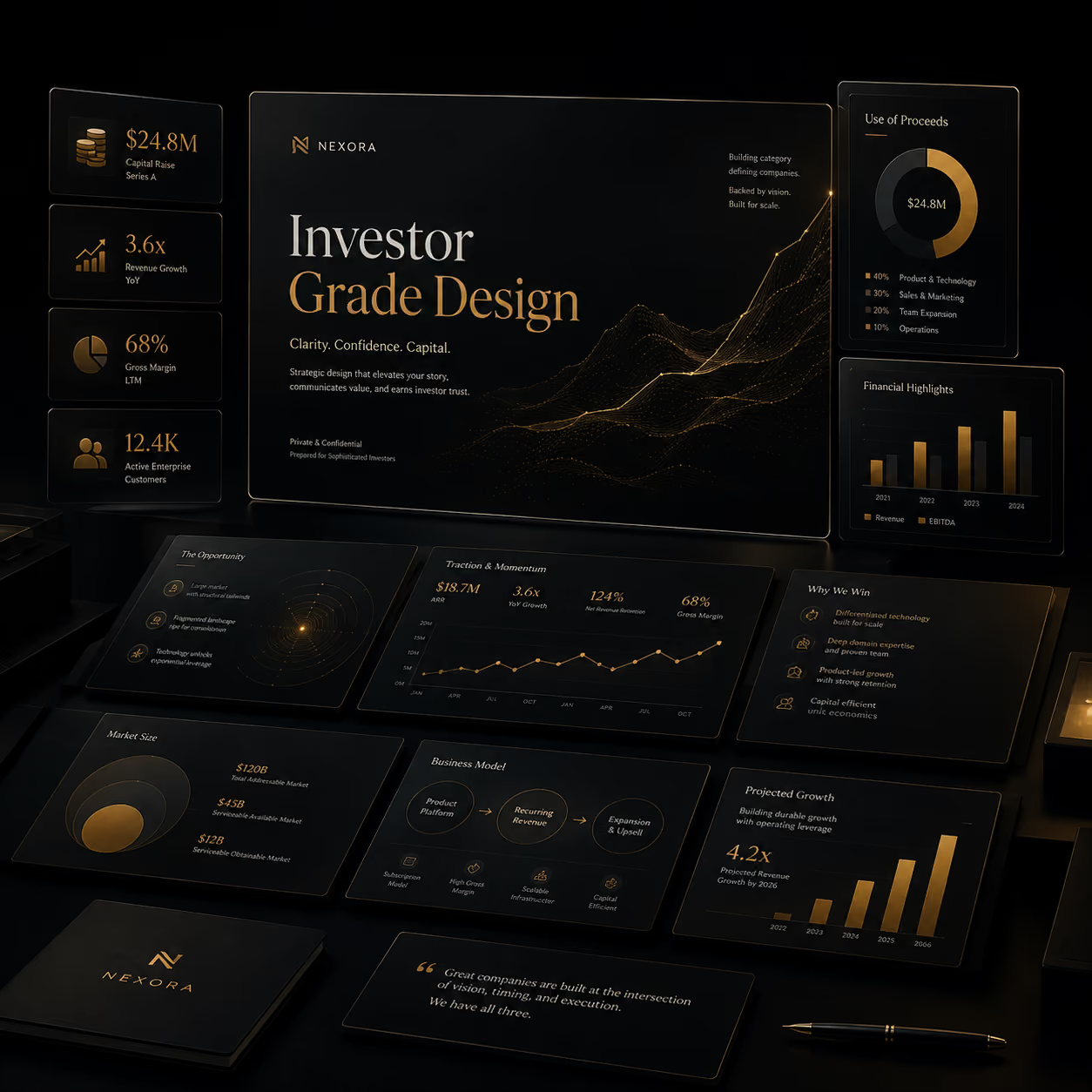
Investor Grade Design
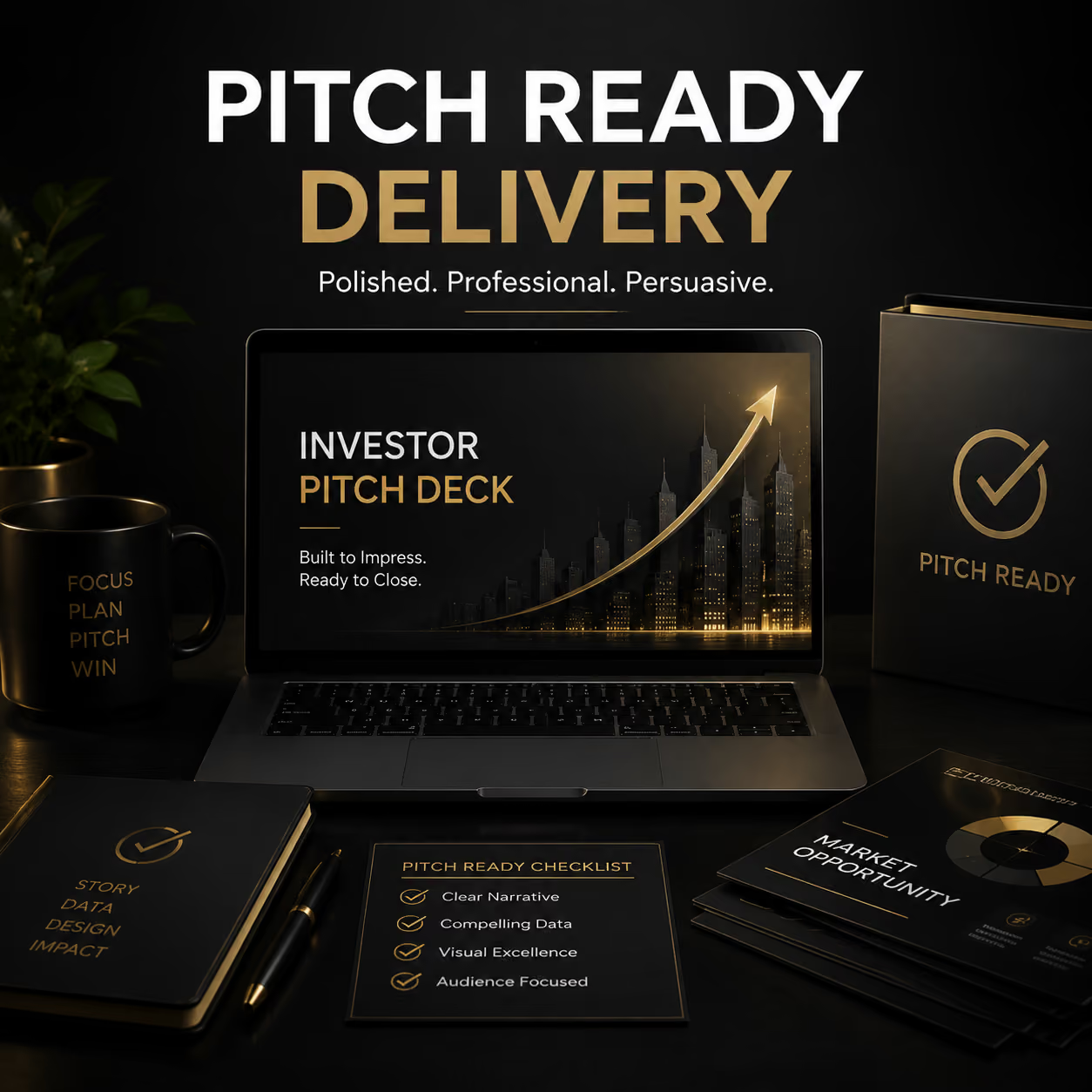
Pitch Ready Delivery


The Rounds That Closed. The Decks That Closed Them.
Every outcome below is verified capital raise data from completed investor deck projects not estimated design impact or hypothetical funding projections.These three cases represent three different funding stages, three different investor types, and three capital outcomes directly influenced by the deck StoryFlo built for each company.
.avif)
Pre-Revenue SaaS Founder Closes $4.2M Seed Round After Narrative Overhaul
A pre-revenue SaaS founder was generating first meetings with seed funds but losing conviction at the market opportunity slide. Investors could not size the opportunity from a top-down TAM figure citing a $14B market report with no bottoms-up validation. StoryFlo rebuilt the market sizing section using a bottoms-up methodology anchored to customer acquisition data and addressable account universe. Three term sheets arrived within six weeks of the new deck reaching investors. The founder closed a $4.2M seed round within eight weeks of launch.
.avif)
Healthtech Company Raises $28M Series B After Deck Restructure
A healthtech company with strong clinical outcomes and proven unit economics had a Series B deck that led with technology architecture before establishing the market penetration story. The lead investor they were targeting had already passed once on the previous version. StoryFlo restructured the narrative to open with regulatory tailwind and patient outcome evidence before introducing the technology layer. The same investor who had passed issued a term sheet within 14 days of receiving the restructured deck and ultimately led the round.
.avif)
PE-Backed Manufacturing Firm Secures $75M Oversubscribed Growth Equity Round
A PE-backed manufacturing company preparing for a growth equity raise had an internally built investor presentation that read as a financial model walkthrough rather than a strategic investment narrative. Growth equity investors evaluating the company needed to see market consolidation opportunity, operational moat depth, and management team credibility — none of which were clearly communicated. StoryFlo rebuilt it as a strategic growth narrative with financials repositioned as supporting evidence rather than the lead story. The round closed oversubscribed at $75M across 22 investor meetings. The first term sheet arrived within 11 days of the new deck entering circulation.
What Founders and CFOs Say
Trusted by founders and capital-raising teams navigating the most competitive funding environments in the United States. These are not design reviews. These are funding outcomes.

22 meetings. Zero term sheets. Third meeting with the new deck, we had our lead. The narrative finally matched what investors needed to hear to say yes.
Four months of circulating the original deck with nothing to show for it. Three weeks after the restructure, we had a term sheet in hand. That shift was genuinely surreal.
The due diligence materials StoryFlo built pre-answered the revenue concentration question that had already stalled two conversations. We moved from term sheet to close without losing momentum once.
Family offices receive hundreds of fund pitches annually. The deck helped us communicate a differentiated thesis clearly enough that three family offices committed in the same week after a single meeting each.
Had no idea where to start. StoryFlo built the narrative from nothing. A Tier 1 seed fund led our round. Never would have gotten that meeting without a deck that read as institutional quality.
22 meetings. Zero term sheets. Third meeting with the new deck, we had our lead. The narrative finally matched what investors needed to hear to say yes.
Four months of circulating the original deck with nothing to show for it. Three weeks after the restructure, we had a term sheet in hand. That shift was genuinely surreal.
Every Raise Stage. One Specialist Agency.
StoryFlo designs investor decks across every capital raise stage from pre-seed through growth equity and LP roadshows because investor expectations, narrative requirements, and proof standards change significantly at each stage.








Great Companies Miss Funding Rounds Every Day.
Most Investor Decks Lose the Room Before Slide Five
Venture capital partners review hundreds of decks monthly, accepting fewer than 3% for initial meetings. The ultimate filter is narrative clarity in the first five slides. Investors make a pattern-match decision instantly; every slide after either builds or costs conviction. This is the central tension of investor deck design.
Opening With the Wrong Question.
Most founders explain what the company does, which investors can find in seconds. The question to answer first is: "is this a large enough opportunity with the right team capturing it at exactly the right moment?" Delaying this past slide three erodes evaluation momentum.
Market Sizing Without Conviction.
Top-down TAM figures from industry reports without bottom-up validation are instantly dismissed by institutional investors. Undefended market sizing signals that the founder has not done the analytical work to justify the opportunity, raising questions about capital deployment.
Traction Presented Without Stage Context.
Metrics in isolation fail to communicate momentum. Revenue and user growth mean different things depending on sector and history. Sophisticated investor presentation design must frame traction relative to stage benchmarks—otherwise, the investor has no real frame of reference.
Team Slides That List Rather Than Argue.
Investors fund execution capabilities. A team slide listing previous titles without arguing why this specific team is uniquely positioned to capture this specific market is a missed opportunity that strong financials cannot fully recover.
These are not presentation problems;
They are capital problems. Every weak slide costs attention and potentially the entire round. A specialist investor deck design agency builds decks from the investor's evaluation framework inward, not the founder's product knowledge outward. This reversal of perspective separates funded decks from polite passes. Align your narrative early by exploring our presentation design services to align your deck with investor expectations.

Founders Build Companies. Specialists Build the Deck That Funds Them.
When looking to refine a capital raise, working with an investor deck designer is crucial because founder-built decks carry a structural blind spot. Founders know their business so thoroughly that they cannot see it the way a first-meeting investor does. Bringing an objective, outside perspective into the narrative is exactly what a company needs to convert meetings.
Investor Pattern Recognition Across Stages.
A specialist has reviewed hundreds of funded and unfunded decks across multiple sectors and capital raise stages. They recognize immediately which narrative structures convert and which ones generate polite passes—a pattern that is not available to a founder on their first raise or an investor deck design agency operating without dedicated fundraising context.
Financial Story Sequencing.
Unit economics, cohort analysis, and financial projections must be sequenced to build investor confidence. A specialist knows which metrics to lead with at each funding stage, which to contextualize with benchmarks, and which to move to a due diligence appendix so the core narrative maintains momentum.
The Forwarding Test.
Most investor decks are designed for live presentations, but the majority of VC evaluation happens when an associate forwards the deck to a partner without context. A specialist designs every deck to pass this test, communicating the investment thesis independently without a presenter.
Stage-Appropriate Conviction Calibration.
A seed deck and a Series B deck require fundamentally different levels of financial disclosure and market proof. Mismatching stage and positioning is one of the most consistent reasons decks generate passes from investors who would have been genuinely interested.
The specialist is a fundraising partner, not a vendor.
The final output is not a beautiful presentation. The output is a funded company. When the deck architecture reflects the investor's evaluation logic, the conversation changes entirely. Founders who understand this close rounds faster. That is what professional investor deck design delivers when executed correctly. Partner with StoryFlo to build your capital narrative today.

Is Your Deck Raise-Ready or Just Good-Looking?
The most expensive mistake founders make is assuming a deck is raise-ready because it looks polished. A visually designed deck and a raise-ready deck are not the same. Strategic investor deck design services deliver the most value when an existing deck looks strong but is not converting meetings. Four diagnostic tests will tell you exactly where your current deck stands before it touches an investor inbox.
A raise-ready deck is defined by how clearly and completely it answers the four tests above. Founders who cannot pass all four should engage professional investor deck design support before approaching investors. The cost of an unready deck is not the design fee it is the round that does not close on your terms.
The Unanswered Question Count.
Note every question your deck raises but does not answer. Moat, concentration, regulatory risk, timing, if your list has more than three unanswered questions, investors will leave with unresolved concerns. Expert investor presentation design eliminates this list before the deck reaches an inbox.
The Forwarding Test.
Send your deck to someone without background and ask them to explain the investment thesis. If their explanation requires clarification, the deck fails the forwarding test which means it will not pass the associate-to-partner forwarding test that happens inside every VC firm before a meeting is booked.
The 90-Second Rule.
Time how long it takes a reader unfamiliar with your company to understand your market, solution, traction, and competitive advantage. If it takes longer than 90 seconds, the deck is not raise-ready. Partner meetings begin with pattern-match evaluation in the first 90 seconds, every second after either builds or costs you your shot.
The Comparable Benchmark.
Compare your deck against three companies that closed rounds in your sector within the last 18 months. Evaluate market narrative depth, financial disclosure level, and traction context. If yours reads as thinner on any dimension, institutional investors will notice.
A raise-ready deck is defined by how clearly and completely it answers the four tests above. Founders who cannot pass all four should engage professional investor deck design support before approaching investors. The cost of an unready deck is not the design fee—it is the round that does not close on your terms.

Investor Deck Design Packages Built for Every Stage
Transparent scope. No hidden fees. Every package includes narrative strategy, content, and investor-grade design.Managing a complex raise? Book a strategy call and we scope around your specific funding structure and investor target list.
Frequently Asked Questions
Questions Founders Ask Before They Hire Us
Looking good and being raise-ready are completely different things. A visually polished deck fails if the narrative ignores investor evaluation logic. Partnering with an investor deck design agency closes that gap. Design quality gets your deck opened; clear narrative structure determines whether a term sheet follows.
Twelve to twenty slides for seed and Series A decks, plus an appendix for diligence. Slide count matters less than completeness; a focused 14-slide deck beats 30 unfocused slides. Professional investor deck design prioritizes narrative economy over volume because extra slides cost valuable momentum.
Yes, and many founders prefer this path. Our investor deck designers begin with a full readiness audit identifying where narrative conviction drops and financial momentum breaks. We preserve what works and rebuild only the elements costing you term sheets, driven by clear capital rationale.
Investors evaluate market size and timing first, followed by team capability and traction evidence. A raise-ready deck answers these three questions within the first five slides. Delaying those proof points past slide five costs you evaluation momentum before the partner meeting even begins.
Both—narrative strategy precedes design. You provide the business data, and our investor deck design agency structures it into an airtight investment thesis. Developing messaging and design as one integrated process ensures your deck looks compelling and actually converts investor meetings into capital.
Each investor type uses different evaluation criteria. VCs evaluate market capture trajectory, PE analyzes EBITDA defensibility, and LPs assess track record consistency. Our investor presentation design calibrates narrative architecture, financial depth, and messaging specifically for your target capital source rather than applying generic templates.
The Capital Is Out There. Your Deck Has to Earn It.
StoryFlo has helped founders and CFOs raise over $5.1B through investor decks built on fundraising narrative strategy and professional investor deck design, not just visual polish. The next step is a free 30-minute strategy call. No templates, no generic decks. A focused conversation about the funding round, the target investor profile, and exactly what the current investor deck needs to close it.